The NICHE 2 project (reference number 2024-1-IS01-KA220-VET-000243941) is a cooperation partnership in the field of Vocational Education and Training (VET), co-funded by the Erasmus+ Programme of the European Commission. The project aims to empower professionals working in intangible cultural heritage with the knowledge and tools needed to successfully manage and lead the green and digital transition in line with the Sustainable Development Goals (SDGs). Building on the success of the previous NICHE initiative, NICHE 2 promotes capacity building through tailored educational resources, fostering innovation and sustainability within the cultural heritage ecosystem.
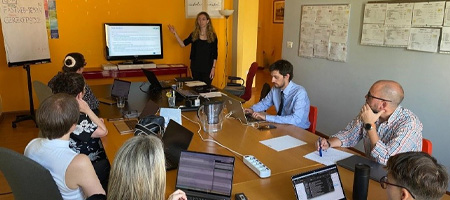
During the meeting, project partners worked collaboratively on the needs assessment phase (Work Package 2), a core component of the project aimed at identifying the challenges and training needs faced by cultural sector professionals when implementing sustainable practices. This analysis was carried out at the national level in the consortium countries — Croatia, France, Spain, Italy, and Iceland — as well as at a broader European level. Partners jointly analysed the results of the assessment to define the skills and thematic areas that will shape the NICHE 2 training programme to be developed in the coming months. The findings highlighted in particular that climate change issues are still rarely integrated into cultural heritage policy-making, while at the same time cultural heritage remains largely absent from climate policy debates, both at EU and national levels.
The research also revealed several key gaps that hinder the alignment of intangible cultural heritage practices with the Sustainable Development Goals, especially those related to Climate Action (SDG 13), Sustainable Cities and Communities (SDG 11), and Responsible Consumption and Production (SDG 12):
-
Many cultural institutions lack staff trained in sustainability planning, energy efficiency, or environmental impact assessment;
-
Professionals are often unfamiliar with available tools or innovations that could support sustainable transitions, partly due to weak links with innovation and start-up ecosystems;
-
There is a lack of leadership and management skills required to embed sustainability into core cultural processes and decision-making;
-
There is a significant lack of understanding of the environmental costs of digitalisation, which may conflict with decarbonisation goals if not managed consciously.
In the coming months, the consortium will present these findings to cultural sector stakeholders — the project’s main target group — in order to jointly design innovative educational solutions that directly respond to their real needs. The meeting also served as a platform for coordinating further project activities, including the development of a sustainability promotion network, dissemination and communication strategies, project management planning, and quality assurance processes.
For more information, visit the official NICHE 2 project website at https://www.nicheproject.eu/index.php or contact the project team via email at nicheproject.eu@gmail.com.