

16 Oct GREEN TOUR partners review research on green skills for sustainable coastal tourism at their second online transnational meeting
GREEN TOUR partners review research on green skills for sustainable coastal tourism at their second online transnational meeting
The online meeting focused on finalising the WP2 study and preparing the transition from research to training.
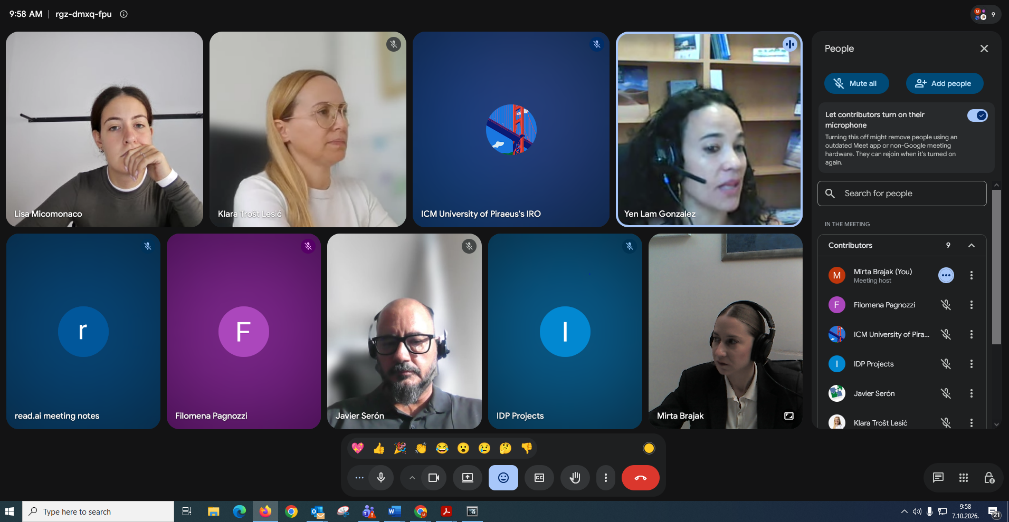
On 7 October 2026, the GREEN TOUR partnership held its second Transnational Project Meeting online, coordinated by the University of Dubrovnik. The meeting centred on the progress of WP2 – Green Pathways Lab, with particular attention to the final study on green skills for sustainable tourism in coastal areas and the role of higher education in their promotion.
 Funded by the Erasmus+ programme, GREEN TOUR – Green Skills for Sustainable Tourism aims to strengthen the capacity of higher education institutions to support the green transition of coastal tourism. Through cooperation between universities and tourism stakeholders, the project will develop training based on micro-credentials, helping students and practitioners acquire the competences needed to support more sustainable tourism practices.
During the meeting, IDP, the organisation leading WP2, presented the research activities and the consolidated study prepared through the partnership’s contributions. Building on a common methodology, national reports and European-level research, the study brings together evidence on sustainable coastal tourism, relevant good practices, skills gaps, barriers and training needs.
A central element of this work is the connection between the identified training needs and GreenComp, the European Sustainability Competence Framework. This provides the basis for defining learning outcomes and developing the Green Skills for Sustainable Tourism Programme under WP3.
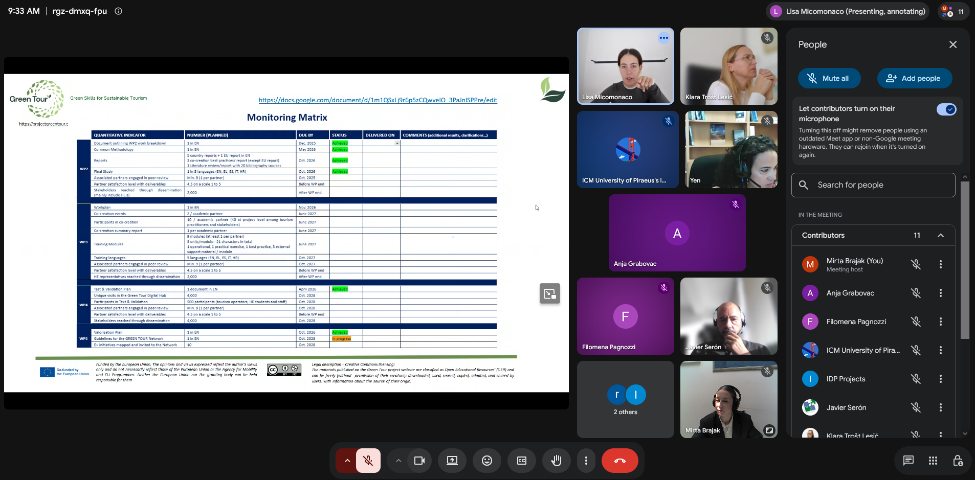 Partners discussed the remaining steps towards completing WP2. These activities will help strengthen the quality and relevance of the research before its publication in English, Croatian, Spanish, Italian and Greek.
The discussion also addressed how the forthcoming training programme should draw on both shared research priorities and the specific needs identified in different national and regional contexts. This will be an important consideration during the co-creation process with tourism practitioners and other stakeholders.
Alongside the focus on WP2, the consortium reviewed project coordination and quality assurance, preparations for WP3, the development of the GREEN TOUR Digital Hub, and dissemination and stakeholder engagement activities.
The meeting marked an important step towards turning the project’s research into practical learning opportunities. By connecting evidence, higher education expertise and tourism-sector needs, GREEN TOUR is laying the groundwork for training that supports the green transition of coastal destinations.
Website: https://www.projectgreentour.eu/